Lebanon has no shortage of voices. What it does have is a YouTube landscape that's genuinely underreported: home to food personalities, documentary filmmakers, psychologists, educators, comedians, and tech builders who've grown serious audiences with almost no institutional support.
This is a real look at the space: who's doing it, what makes Lebanese content distinct, what the actual challenges are, and what works if you're thinking about starting.
The Creators Who've Made It
A few categories dominate Lebanese YouTube, and they reflect something real about what audiences want from Lebanese content.
Food is Lebanon's strongest cultural export, and it shows on YouTube. Anthony Rahayel built NoGarlicNoOnions into an internationally recognized food journalism channel by documenting Lebanese restaurants and eateries with the seriousness of a cultural archive. Abir El Saghir took a different approach, cooking tutorials and Middle Eastern recipes, and built one of the largest food audiences of any Arabic-language creator online. Both succeeded by leaning into Lebanese specificity rather than competing on generic terms.
Comedy and lifestyle have produced some of the most relatable Arabic-language content on the platform. Lebanese comedy tends to work because it captures something precise: the gap between tradition and modernity, the particular absurdities of Lebanese daily life, the humor that comes from a culture that's been navigating chaos for decades. Marc Hashem and a generation of creators after him have turned that specificity into genuine reach.
Education and expertise is where some of the most durable channels live. Lamis Shaaban, a Lebanese psychologist, has built one of the most-viewed Arabic-language YouTube channels in existence, entirely on relationship advice and emotional intelligence content. No production budget advantage, no celebrity backing. Just consistent, expert content in Arabic, which remains underserved relative to demand. The same pattern holds in tech, cooking, and documentary content.
Family vlogging in Arabic has an enormous, loyal audience across the MENA region and the diaspora. Lebanese family channels consistently rank among the most-subscribed Arabic-language creators on the platform. The format works because it's consistent, emotionally engaging, and builds community over time.
What these categories share is that none of them succeed by being generic. The Lebanese creators who've built durable audiences picked something specific and went deep.
What Makes Lebanese YouTube Distinct
A few structural features set Lebanese content apart from the broader Arabic YouTube ecosystem.
The diaspora multiplier. There are roughly three times as many Lebanese living outside Lebanon as inside it. That diaspora is spread across the Gulf, West Africa, Europe, and the Americas, and it consumes Lebanese content actively. For a creator based in Beirut, the domestic audience is almost a bonus. The real distribution is global, through communities that are hungry for content that speaks to their cultural background. Lebanese content that is specific enough to be authentic travels to those communities in ways that generic pan-Arab content doesn't.
The language advantage. Lebanon is genuinely trilingual in a way that few other countries are. Arabic, French, and English are all real options for content, either separately or in combination. The creators who've built the broadest reach have used this to their advantage, whether by targeting different language audiences, producing bilingual content, or creating videos that cross language lines through visuals and tone.
Cultural specificity as a competitive moat. Lebanese food, humor, music, and social dynamics are distinct enough that they stand out from regional competition. The creators who lean into this tend to outperform those who try to produce content that could have come from anywhere. There's a version of every niche that is specifically Lebanese, and that version usually has less competition and more loyal audiences.
The Real Challenges
Anyone looking for an honest picture of what it takes to build a YouTube channel from Lebanon needs to understand the actual obstacles: not to be discouraged, but because knowing them in advance is the difference between solving them and being surprised by them.
Getting paid requires planning. YouTube monetization is available in Lebanon, but Lebanese banking infrastructure adds friction to extracting earnings reliably. Successful creators typically work through international accounts, transfer services like Wise, or in some cases cryptocurrency, to access their revenue consistently. This is entirely solvable, but it requires setting up the infrastructure before you need it urgently.
The domestic market has a ceiling. Lebanon's population is small relative to the broader Arabic-speaking world. Creators who build only for Lebanon will hit that ceiling faster than those who think from the start about the diaspora and the wider Arab audience. The good news is that YouTube doesn't require physical proximity to your audience. Building for the Arab world from Beirut is the same job as building for it from Dubai.
Infrastructure creates friction. Power and internet reliability in Lebanon require working around rather than through. Serious creators invest in backup power and plan their recording schedules accordingly. It's a real cost in time and money that creators in more stable infrastructure environments don't face. The Lebanese creators who've built durable channels are generally those who became good at operating under constraint.
Consistency is harder here. Economic volatility and political instability have interrupted the output of many Lebanese creators at different points. Building systems that keep content moving during disruptions, batching content ahead of time, building a buffer, working on a schedule that accounts for unpredictable weeks, is more important for a Lebanese creator than for one operating in a more stable environment.
What Actually Works
Looking across the creators who've built real audiences from Lebanon, a few patterns hold consistently.
Start in Arabic. The Arabic-language content market is large and growing, and it's served by far fewer professional creators than the English-language equivalent. The gap between what Arabic-speaking audiences want and what's available to them is still significant in most niches. I tested this directly when building my own content: running the same concept in both English and Arabic simultaneously. Arabic won by every measure. The same logic applies across niches, from cooking to education to comedy.
Be specific. Generic content competes on production scale, and Lebanon doesn't have scale advantages over better-resourced markets. Content that is specifically Lebanese, specifically expert, specifically cultural, has a natural audience that global mega-channels can't easily take from you. Specificity is the moat.
Build for the diaspora from day one. A Lebanese creator in Beirut and a Lebanese creator in Lagos or Montreal are essentially producing for the same audience. The diaspora is distributed, but it's real, it's large, and it's underserved. Thinking about this from the start shapes everything from topic selection to language choices to how you frame your content.
Solve the money infrastructure early. Don't wait until you're earning significant revenue to figure out how you'll receive it. Set up international accounts, understand your options, and test the process with small amounts before it becomes an urgent problem.
Consistency beats production quality at the start. The Lebanese creators who've scaled were almost universally consistent before they were polished. The infrastructure challenges make this harder, which is exactly why batching and scheduling matter more here than in other markets.
A First-Person Note
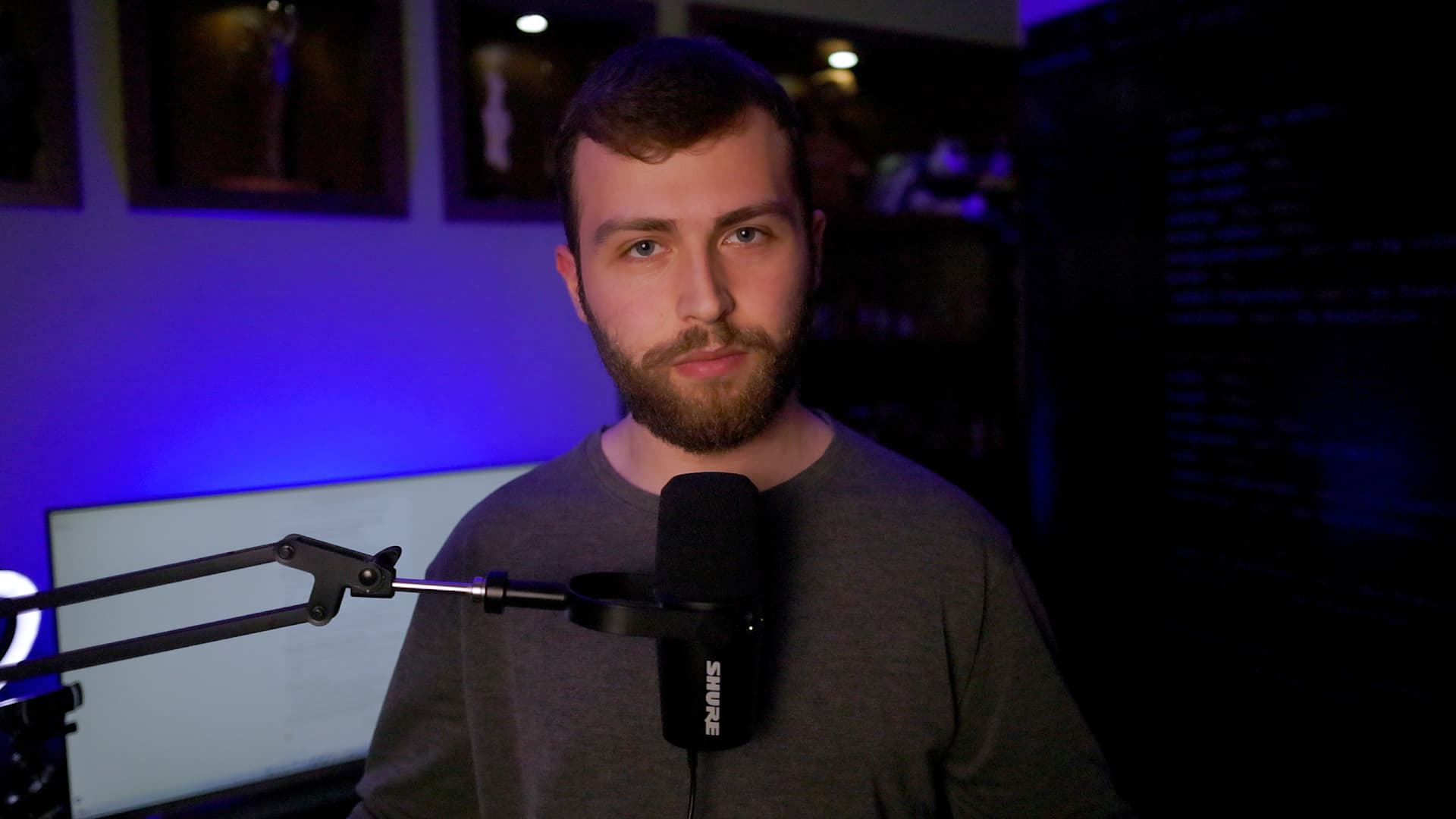
I started my own YouTube channel in Lebanon at 14, teaching myself to edit with no budget and no guidance. The gaming channel I built, Bad Mike, ranked in Lebanon's Top 100 YouTubers. Years later, I built Devrabic : an Arabic-language tech education channel that grew to 130,000+ followers and 500+ paying students.
Neither happened because Lebanon was an easy place to build. They happened because the gap was real and the consistency was there. The payment complications, the infrastructure friction, the economic instability: all of it was real. None of it was a reason not to start.
The Lebanese creators who've made it are mostly people who decided to work around the constraints rather than wait for them to disappear.